Need Help? Contact Us
Contact Us
Choose WhatsApp, phone or email and our team will help
Monday to Saturday: 09 AM to 06 PM
Sunday: 10AM to 3 PM
The team typically replies in a few minutes.

- [email protected]
- 03334440376
- Monday to Friday 8:30 - 17:30
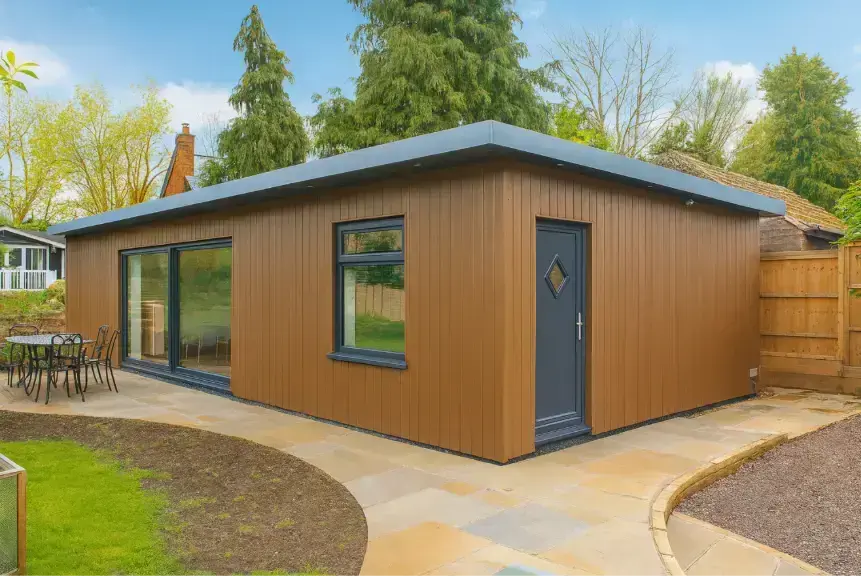
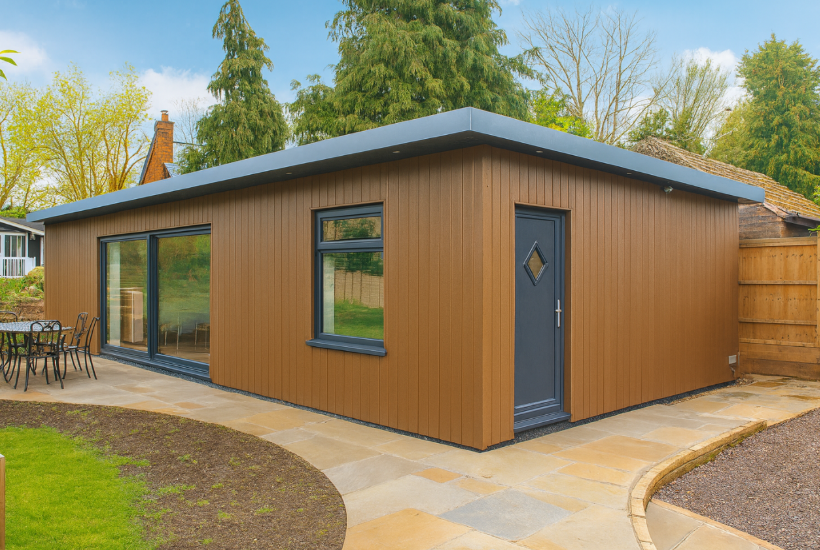
For many UK families, later-life care is quietly becoming one of the biggest financial decisions they will ever face.
With residential care fees now regularly exceeding £70,000 per year, it’s not unusual for families to spend more than £350,000 over five years on care costs alone - often with very little left behind financially once that money has gone.
It’s one of the reasons more homeowners are beginning to ask a very different question: Is there a smarter long-term alternative?
Increasingly, families across the UK are discovering that a granny annexe or mobile home solution can offer far more than just additional accommodation.

For some, it’s becoming a way to:
- keep loved ones close
- protect independence
- reduce long-term housing costs
- preserve family wealth
- and plan ahead before decisions become reactive rather than proactive
Because in many cases, the most expensive decision families make is leaving the conversation too late.
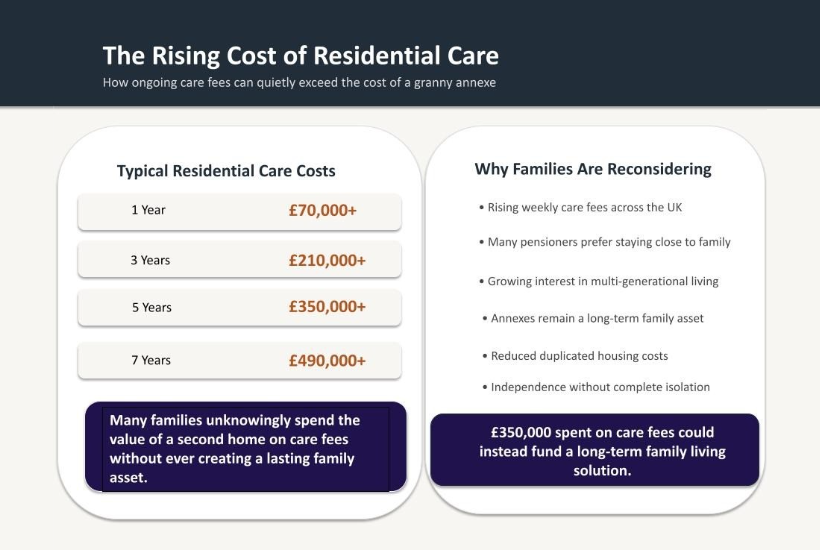
The Rising Cost of Residential Care
The reality is that many people simply don’t realise how expensive residential care has become until they start looking into it properly.
Depending on location and level of support required, many UK care homes now cost somewhere between £1,000 and £1,500 per week - and in some parts of the country, considerably more.
That quickly adds up.
Typical costs can look something like this:
- Around £70,000 per year
- More than £210,000 over three years
- Potentially £350,000+ over five years
And that’s before additional expenses are factored in.
For example, a family paying £1,450 per week for residential care could easily see annual costs exceed £75,000 once personal spending, transport, hairdressing and additional support services are included.
For many families, that financial reality can come as a genuine shock.
Especially when much of that money is often funded through:
- property equity
- savings
- investments
- or the eventual sale of the family home
Why More Families Are Re-Thinking Traditional Living Arrangements
At the same time as care costs are rising, family dynamics are changing too. People are living longer. House prices remain high. Adult children are increasingly struggling with housing affordability. And many older people simply don’t like the idea of moving into traditional residential environments unless absolutely necessary.
As a result, multi-generational living is becoming far more common across the UK.
But unlike previous generations where families often lived together purely out of necessity, today’s homeowners are looking for something more balanced: independence, while still staying close to family.
That’s one of the reasons interest in bespoke granny annexes and multi-generational living solutions has grown so significantly over recent years.
The Financial Comparison Many Families Never Actually Make
When families begin discussing later-life living arrangements, the focus often goes straight to the upfront cost of building an annexe.
But surprisingly few people compare that figure against the potential long-term cost of the alternatives.
For example: A care home costing £1,350 per week works out at more than £70,000 per year. Over five years, that’s more than £350,000 spent on ongoing accommodation and care. And once that money has gone, it’s gone.
There’s also an irony that many families quietly struggle with emotionally: for many older people, these weekly care costs can far exceed anything they ever spent on themselves during their entire working lives.
After decades of careful saving, paying mortgages and trying to build financial security for their families, many pensioners suddenly find themselves in a situation where enormous sums of money are being spent simply to maintain day-to-day living arrangements later in life.
At the same time, most older people consistently say the same thing when asked about later-life living preferences: they would rather remain close to family, familiar surroundings and everyday family life for as long as possible.
Which is one of the reasons more families are beginning to ask whether there may be a more balanced alternative between complete independence and full residential care.
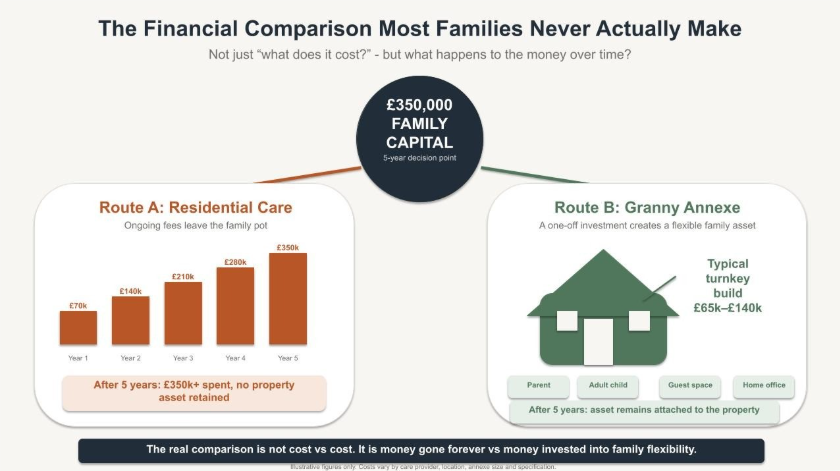
Now compare that with a fully self-contained granny annexe.
Depending on the size and specification, many turnkey annexes fall somewhere between £75,000 and £140,000.
Of course, every project is different, but the key difference is this: the money is being invested into a long-term family asset attached to your property.
That additional space may later be used for:
- elderly relatives
- adult children
- guests
- home working
- future care support
- downsizing within the family
Which is why more families are starting to question whether traditional care routes always make the most financial sense.
As one client recently put it:
“We realised we were potentially going to spend the value of a second home on care fees without actually creating anything long term for the family.”
And honestly, that’s the point where many people begin looking at things differently.
It’s About More Than Just Saving Money
Of course, not every situation is suitable for an annexe.
Some people require specialist medical support or full-time care that can only be provided in dedicated facilities.

But for many families, the concern is less about intensive medical care and more about:
- loneliness
- reduced confidence
- isolation
- struggling with day-to-day living
- or simply wanting loved ones closer by
That’s where annexes can provide something that many people feel traditional care setups struggle to offer:
a balance between independence and support.
A well-designed annexe allows someone to maintain:
- privacy
- routine independence
- dignity
…while still remaining connected to everyday family life.
For many older people, that emotional side matters just as much as the financial one.
The Hidden Value Families Often Overlook
One thing that’s rarely discussed is how flexible an annexe can become over time.
Unlike ongoing care fees, the investment doesn’t simply disappear.
In many cases, the space continues serving the family long after the original need changes.
Over the years it might become:
- guest accommodation
- somewhere for adult children to stay
- a home office
- temporary accommodation during life changes
- or additional living space later in retirement
There can also be wider financial benefits linked to:
- shared utilities
- reduced duplicated household costs
- avoiding stamp duty on separate properties
- avoiding moving costs
- keeping family support networks closer together
And while every situation is different, many homeowners are increasingly realising that the land they already own may provide a far smarter long-term solution than they first assumed.
Final Thoughts
There’s no universal answer when it comes to later-life living arrangements.
Every family situation is different.
But one thing is becoming increasingly clear: more people are starting to question whether spending hundreds of thousands of pounds on ongoing residential accommodation is always the only - or best - option available.
For many families, a granny annexe is no longer viewed as simply “extra space in the garden.
It’s becoming:
- a long-term planning decision
- a way to keep family close
- a wealth-preservation strategy
- and a more flexible way of living across generations
And with both housing and care costs continuing to rise, it’s a conversation that more families are beginning to have earlier rather than later.
If you’re exploring whether a granny annexe could work for your family, you can view more information and examples on The Granny Annexe Company website.
recent posts

Search
People also search for:
Top